
 |
|
|
|
 |


|
|
 |
 |

|
 |

|
(#1)
|
|
|
Im not dark, Im over ripened! xD

Offline
Posts: 5,607
Join Date: Sep 2007
Location: Westampton NJ
|
01.13.2011, 10:17 PM
Quote:
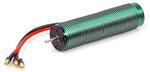
 I have a big 80-100 outrunner that does 4amps with load 
R/c Monster Team Driver Jq the car, LST, Sportweks turmoil pro Unconventional Techniques, Superior Results |
|
    |

|

 |
 |
 |
|
|
|
|
|
|
(#2)
|
|
RC-Monster Carbon Fiber
Offline
Posts: 471
Join Date: Feb 2010
|
01.14.2011, 05:41 AM
Patrick, this isn't exactly right, there is a small amount of power which is lost in the bearings and in the air friction no ?
The motor is not really at "no load" but "air loaded". Maybe it's only 0,5 or 1% of the no load power... What's your opinion about aerodynamics and bearings losses ? (I doubt that a lot power is lost in the bearings anyway, other than that they would be quickly ripped apart...) MBX5T Prospec MMv3 NEU-CC 1520/1Y 6S "Overkill Flying machine" ;) Brushless, what else ? |
|
|
|
|
|
|
|
No load |
|
|
|
|
|
(#3)
|
|
JERRY2KONE SUPERMAXX

Offline
Posts: 3,452
Join Date: Sep 2006
Location: HAYMARKET VIRGINIA
|
No load -
01.14.2011, 06:20 AM
No load just means that there is nothing attached to the rotor creating drag on the rotation of the shaft. The losses at no load are so miniscule that they really do not matter. The losses that really matter are shown in the comparison between the CC motor and the HK motor of the same size and spec. Those huge differences are what create the heat on a cheaper motor, where the CC motor will remain reasonable temp wise.
|
|
|
|
|
|
|
|
|
|
|
|
|
(#4)
|
|
|
RC-Monster Brushless
Offline
Posts: 2,085
Join Date: Sep 2007
|
01.14.2011, 09:14 AM
Quote:
All kidding aside, Castle does make a superior product. Greatness is often imitated but never duplicated. 
|
|
|
|
|
|
|
|
|
|
|
|
|
|
(#5)
|
|
|
RC-Monster Titanium

Offline
Posts: 1,697
Join Date: Mar 2008
|
01.14.2011, 10:09 AM
Quote:
To determine what the bearing and windage losses are, you can measure no load current at, say, 6V and at 10V. The difference (usually very small) will be the contribution of bearing and windage losses. President, Principle Engineer Castle Creations |
|
|
|
|
|
|
|
 |
«
Previous Thread
|
Next Thread
»
| Currently Active Users Viewing This Thread: 1 (0 members and 1 guests) | |
| Thread Tools | |
| Display Modes | Rate This Thread |


 Hybrid Mode
|
|

Powered by vBulletin® Version 3.8.11
Copyright ©2000 - 2026, vBulletin Solutions Inc.
vBulletin Skin developed by: vBStyles.com
Copyright ©2000 - 2026, vBulletin Solutions Inc.
vBulletin Skin developed by: vBStyles.com
